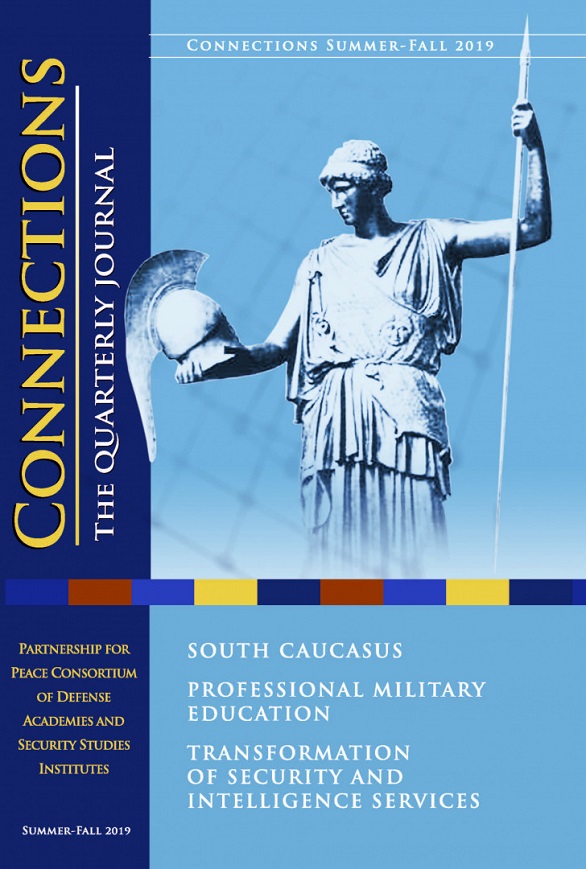
Connections
Culture is defined in various ways. It often depends on an individual’s experiences, the associated era, and societal norms and values. The various definitions indicate that culture is a contextually dependent concept. It is something by which the identity of a person, group, community, minority, organization, or nation can be recognized. Schools, as special educational institutions, have their own specific cultures. Each school’s culture may be defined as its way of life and work, the influence of tradition, and the behavior of those attending which includes the teachers and all of its employees. Military organizations, which are some of the oldest and most prominent institutions, are specific working environments with a distinctive culture. Joining the armed forces involves giving up part of one’s private life in order to become a soldier, a noncommissioned officer (NCO) or an officer. When a person enters a military school system, significant life changes occur, with the acceptance of different forms of personal, social, and professional activities. This article analyzes the Dr. Franjo Tuđman Croatian Defense Academy education system to identify the distinctive characteristics of a military school culture.
Previous Issue
 The Summer 2017 issue of Connections presents original research in the role of strategic communication, or StratCom, in shaping the image of a security sector organization with examples from the experience of the US and Ukraine, lessons learned from the decades long conflict in Western Sahara, and the interplay of NATO and Russia's interests in the...
Read More
The Summer 2017 issue of Connections presents original research in the role of strategic communication, or StratCom, in shaping the image of a security sector organization with examples from the experience of the US and Ukraine, lessons learned from the decades long conflict in Western Sahara, and the interplay of NATO and Russia's interests in the...
Read More