Connections
Introduction
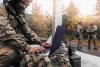
The completion of a cross-national research study on a sizeable sample of military personnel who had participated in asymmetric warfare operations has resulted in a variety and breadth of survey material that is deserving of further examination. Additional study of the data gathered in this research is particularly important in order to reconstruct the environment of this type of warfare, with special regard to the human impact of such conflicts on the participants.
This closer look is possible because of the way in which the research was conducted, by means of in-depth, semi-structured interviews, which gave the interviewees a chance to go beyond the topics strictly pertaining to the interview’s structure and to talk more expansively about their lived experiences, emotions, and backgrounds. The richness of this data will be rendered in this essay through direct quotation of the interviewees’ responses, preserving their vivacity and, at times, simplicity, and limiting the comments of the article’s author to a minimum.
The essay deals with four aspects of asymmetric conflict: its nature as seen by the participating soldiers, their relations with the other actors present in the theatre of operations, their assessment of how the soldiers to be sent on a given mission were selected and prepared, and the particular experiences gained in the theatre.
Previous Issue
 The Summer 2017 issue of Connections presents original research in the role of strategic communication, or StratCom, in shaping the image of a security sector organization with examples from the experience of the US and Ukraine, lessons learned from the decades long conflict in Western Sahara, and the interplay of NATO and Russia's interests in the...
Read More
The Summer 2017 issue of Connections presents original research in the role of strategic communication, or StratCom, in shaping the image of a security sector organization with examples from the experience of the US and Ukraine, lessons learned from the decades long conflict in Western Sahara, and the interplay of NATO and Russia's interests in the...
Read More